What Changed in UK Gambling Rules in 2025 - and What Changes Next in 2026
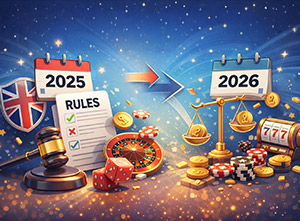
The past year marked a decisive turning point for Britain’s gambling industry. After years of consultation, delay and political recalibration, 2025 became the moment when reform shifted from abstract policy to practical reality. What had long been promised as reform became regulatory reality, as the government’s overhaul of gambling rules started to alter the mechanics of the industry itself. Further changes are already on the horizon for 2026, reinforcing a shift toward more active oversight and a framework built around consumer protection and financial responsibility.
The legacy of the White Paper finally takes form
The Gambling Act review, first raised in 2020, shaped years of regulatory debate. While the 2023 White Paper set out an ambitious programme of reform, it offered little certainty on timing. By 2025, those long-anticipated changes were beginning to take effect.
One of the most consequential shifts came with the introduction of tighter rules on promotional incentives. The regulator was explicit in its view that overly complex offers could undermine consumer understanding and increase risk. Offers combining multiple conditions, products or wagering mechanics were increasingly discouraged, with the aim of ensuring that players fully understand what they are signing up to. This shift has already influenced how bonuses are structured and presented, reducing the use of convoluted mechanics that blurred the true cost of participation.
Alongside this, operators were required to present key information more prominently. Wagering requirements, withdrawal restrictions and time limits now need to be communicated in plainer language. The emphasis moved from mere technical compliance to genuine consumer comprehension.
A sharper focus on financial risk
Another defining feature of 2025 was the regulator’s growing confidence in intervening around financial risk. The much-debated concept of affordability checks evolved into what is now framed as “financial risk assessments”. Rather than universal intrusive checks, the system is designed to be targeted, data-led and proportionate.
In practice, this places a new responsibility on operators to recognise indicators of financial vulnerability earlier and to apply safeguards proportionately. While the industry remains wary of the mechanics of implementation, the direction of travel is clear. Prevention, rather than reaction, has become the central measure of regulatory compliance.
For players, the change is most apparent in the increased emphasis on spending limits and account controls, particularly when activity patterns alter sharply. The experience of using a casino platform in the UK now reflects closer regulatory oversight, even in casual use.
Advertising pressure and public scrutiny
Advertising proved one of the most sensitive pressure points in 2025. Despite the absence of an outright ban, the atmosphere surrounding gambling promotion became more hostile. Sports sponsorships, influencer activity and broadcast presence were all reassessed through a more critical lens.
Regulatory guidance made clear that adherence to formal codes alone would not guarantee compliance. Campaigns were increasingly judged on their broader social impact, with particular concern directed at youth appeal and financially suggestive messaging. The effect has been a noticeable cooling of marketing tone across the industry.
What 2026 is set to bring
If 2025 marked the phase of implementation, 2026 is set to be one of consolidation. A number of measures are already scheduled and will further shape how gambling is offered and regulated.
Chief among them is the introduction of a cap on bonus wagering requirements, due to come into force in January 2026. By curbing excessive wagering requirements, regulators are seeking to remove offers that rely on headline appeal rather than achievable outcomes. The measure is expected to influence how promotions are structured, favouring simplicity over inflated claims.
Later in the year, further requirements around player-set financial limits are expected to come into force. Operators will need to ensure that customers actively engage with deposit and loss limits, rather than passively accepting default settings. The emphasis is on informed choice, supported by clearer user interfaces and fewer opportunities for limits to be raised impulsively.
Taxation also remains a background concern. While changes to Remote Gaming Duty are not framed as a player protection measure, they may influence how operators prioritise products, potentially affecting the balance between slots, live games and table offerings.
A quieter but firmer regulatory era
What distinguishes this phase of reform is its tone. The changes are not theatrical, nor are they designed to grab headlines. Instead, they reflect a regulatory philosophy that is becoming more confident, more data-driven and less tolerant of ambiguity.
For players, the experience of gambling in the UK is becoming more structured and predictable. For operators, the margin for interpretation is narrowing. And for policymakers, 2026 represents an opportunity to assess whether this incremental approach delivers the safer environment long promised.
The debate about gambling in Britain is far from settled. But after years of anticipation, the rules are no longer theoretical. They are shaping behaviour, design and expectations in real time — and the next phase is already on the calendar.
By GamesAndCasinoRelated News
-
Read Full Article
 Games & Casino News
New Zealand Aims to Regulate Online Casinos by 2026
Games & Casino News
New Zealand Aims to Regulate Online Casinos by 2026
New Zealand plans to auction online casino licenses and enforce strict gambling regulations to boost economy and safety.
-
Read Full Article
 Gambling News
The Greek Online Licensing Process Has Been Cleared
Over the past few years, we've seen the online gambling industry change quite a bit. What was once a wide open industry with little to no regulation has seen many individual countries make moves to regulate the industry on their own terms. Greece has recently joined them after efforts from the Greek parliament led to the Deputy Finance Minister giving the go-ahead. Terms and Conditions of the Deal Right now, there are 24 operators who have been issued temporary 36-month licenses.
Gambling News
The Greek Online Licensing Process Has Been Cleared
Over the past few years, we've seen the online gambling industry change quite a bit. What was once a wide open industry with little to no regulation has seen many individual countries make moves to regulate the industry on their own terms. Greece has recently joined them after efforts from the Greek parliament led to the Deputy Finance Minister giving the go-ahead. Terms and Conditions of the Deal Right now, there are 24 operators who have been issued temporary 36-month licenses. -
Read Full Article
 Gambling News
U.K. Online Gambling Reforms Coming
The dominoes are still falling after the 51 page indictment by the U.S. Department of Justice and now the British government is taking notice. It is Full Tilt Poker again at the center as they have left hundreds of British poker players, just like other online poker players who played there, left without being able to get a hold of their funds.
Gambling News
U.K. Online Gambling Reforms Coming
The dominoes are still falling after the 51 page indictment by the U.S. Department of Justice and now the British government is taking notice. It is Full Tilt Poker again at the center as they have left hundreds of British poker players, just like other online poker players who played there, left without being able to get a hold of their funds.