From Credit Cards to Crypto: The Evolution of iGaming Payments
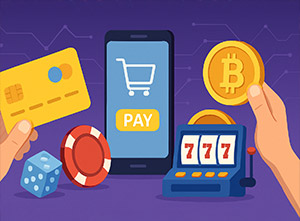
Online casinos have always relied on payment innovation to shape the player experience. The story of iGaming is not only about games, but about how players move money in and out of their accounts. From the earliest credit card transactions to today’s experiments with cryptocurrencies, every stage has reflected both technological change and evolving player expectations.
The Early Days: Cards and Bank Transfers
When online casinos first appeared in the 1990s, payment options were limited. Credit and debit cards were the backbone of the industry, offering players a familiar and widely accessible method. For many, using a Visa or Mastercard was the easiest way to start playing.
Yet these methods also had drawbacks: transaction times were slow, withdrawals could take days, and fees were often high, especially for international players. Bank transfers added a layer of security but introduced even longer delays. The result was an experience that felt safe but lacked the speed players would later demand.
The Disruption of E-Wallets
The introduction of e-wallets in the early 2000s changed the dynamic. Services like PayPal, Skrill, and Neteller brought new speed and flexibility. Players could deposit almost instantly, withdraw faster than with bank transfers, and avoid exposing their card details directly to casino platforms.
E-wallets also marked the start of a cultural shift: convenience became just as important as trust. Players began to expect transactions that matched the real-time nature of the games they were playing. The success of e-wallets pushed casinos to expand payment options, diversifying beyond traditional banking.
Mobile Payments and Open Banking
The rise of smartphones introduced yet another layer of innovation. Mobile-first solutions such as Apple Pay and Google Pay allowed players to deposit with a fingerprint or face scan, embedding payments into the daily digital routine.
At the same time, open banking initiatives in Europe gave players direct access to instant transfers between their bank accounts and casino balances. These tools built on the trust of traditional banking while matching the immediacy of e-wallets. By the late 2010s, players in regulated markets were enjoying unprecedented flexibility in how they managed their casino funds.
The Arrival of Cryptocurrencies
Cryptocurrencies are the newest chapter in this story. Promising near-instant transactions, global reach, and a degree of privacy, they offer features that resonate strongly with digital-first players.
For years, crypto was the domain of offshore operators and unregulated markets. But today, the picture is changing. In Spain, for example, some DGOJ-licensed operators have begun to enable crypto-funded deposits through intermediaries like Bitnovo Pay. These deposits are converted into fiat and withdrawals are paid in euros, ensuring that KYC and AML obligations remain fully in place.
As Daniel Castillo from MejoresCasinos explains in his perspective on crypto in regulated casinos, digital currencies should be seen as the next step in iGaming’s long payment journey. Just as e-wallets didn’t replace cards but coexisted with them, crypto is not a disruptive break but a continuation of the industry’s evolution.
Castillo stresses that regulation is the differentiator. Players using crypto under Spain’s framework still undergo KYC verification, AML screening, and benefit from responsible gambling safeguards. This ensures that crypto’s advantages—speed, lower fees, and privacy—are delivered without compromising player protection.
Why Regulation Matters
History shows that payment innovation in iGaming only works when players trust the system. Each leap forward—from cards to e-wallets to mobile payments—was accompanied by stronger security standards and clearer regulation. Cryptocurrencies are no different.
The European Central Bank (ECB) has highlighted that digital assets, including the potential Digital Euro, must be integrated into transparent, regulated ecosystems to provide long-term stability. For iGaming, this reinforces the idea that crypto can only scale if regulators allow it within well-defined frameworks—precisely the model Spain is beginning to demonstrate.
The Bigger Picture: An Evolution, Not a Revolution
Looking back, it’s clear that each stage in the evolution of iGaming payments has been driven by a balance of three factors: speed, security, and trust. Cards delivered familiarity, e-wallets delivered speed, mobile payments delivered convenience, and now crypto promises autonomy and global reach.
But none of these stages erased what came before. Players today often use multiple methods—choosing cards for familiarity, e-wallets for convenience, and crypto for speed and flexibility. The payment ecosystem has become layered rather than linear, reflecting the diverse needs of players.
What Comes Next
If history is a guide, the rise of crypto will not be the final chapter. Instead, it will be part of a blended future where players can choose from an array of digital options, including central bank digital currencies, instant bank transfers, and blockchain-based assets.
For casinos, the challenge is to integrate these methods seamlessly while ensuring compliance. For regulators, the challenge is to encourage innovation without compromising player protection. And for players, the result is more choice than ever before.
Closing Insights
The history of iGaming payments is a story of continuous evolution. From the early days of slow bank transfers to the instant convenience of mobile wallets, each stage has reshaped how players interact with casinos. Cryptocurrencies are simply the latest link in that chain—a technology that fits naturally into the bigger picture.
By embracing crypto within regulated markets, iGaming can continue to evolve in a way that gives players both freedom and protection. And as Spain’s example shows, the future of payments in online casinos will be shaped not by revolution, but by steady, thoughtful evolution.
By GamesAndCasinoRelated News
-
Read Full Article
.png) Games & Casino News
Alea Adds Sportsbook as iGaming Platforms Push Further Into Multi-Vertical Models
Games & Casino News
Alea Adds Sportsbook as iGaming Platforms Push Further Into Multi-Vertical Models
Alea is expanding its iGaming offering with sportsbook technology through an exclusive partnership with FIRST.bet. The move highlights the growing shift toward multi-vertical platforms that combine casino, sports betting, payments and other gaming products under one account.
-
Read Full Article
 Games & Casino News
Michigan’s Record Online Casino Growth Keeps Raising the Bar for Regulated iGaming
Games & Casino News
Michigan’s Record Online Casino Growth Keeps Raising the Bar for Regulated iGaming
Knowing what a mature market looks like helps readers sort hype from substance. Michigan has become one of the clearer examples in US online gambling due to the numbers associated with its rise.
-
Read Full Article
.png) Gambling News
Ontario iGaming Sets New Revenue And Player Engagement Records
Gambling News
Ontario iGaming Sets New Revenue And Player Engagement Records
One of the most prominent iGaming markets in the Northern Hemisphere and globally is Ontario, Canada.